Eighth Grade

It’s amazing what you can accomplish when you put your heart and mind to it. That could well be the motto of the Eighth Grade year at Aspen Country Day School. Students often start the year with a leadership retreat right before school begins, then serve as role models for younger students on Middle School Outdoor Ed. They quickly move into preparing for the Humanities class trip to Washington, DC, and many participate in Sister Cities trips. Everyone is planning for high school, and in the fall and winter many take the SSAT (Secondary School Admissions Test) along with trips to visit boarding schools. Then there’s the landmark final Outdoor Ed trip in May, followed by a graduation where each Eighth Grader writes and delivers an original speech. It is a whirlwind year, full of confidence, resilience, and joy in learning.
ACADEMICS

Working at full power, the Eighth Graders are on fire with their many responsibilities and intellectual adventures in this, their final year of the Country Day journey. They are writing thoughtful essays, mastering the quadratic equation, doing experiments in the science lab, and collaborating on group projects, left.
Humanities
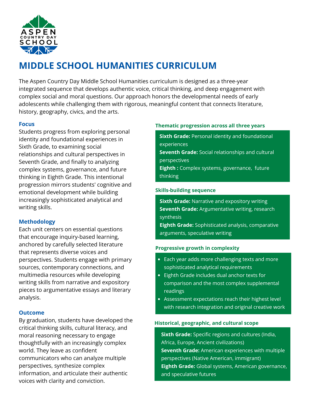
Eighth Grade Humanities is designed to prepare graduates for high school study with strong critical thinking and literacy skills and a deeper understanding of our world and its past. Humanities combines the traditional disciplines of English and history into a singular class that captures the social studies and English benchmarks through engaging thematic units based on core texts. Here is the curriculum for the three-year progression in Humanities including essential questions, core texts, and supplemental readings
Mathematics
Course descriptions from 2020-21 report cards:
standard course: Eighth Graders study algebraic functions, linear equations, and systems of equations. Students engage with the material through traditional note-taking, daily homework assignments, and digital math tools. Students build their expertise with mathematical practices by maintaining an organized notebook, showing all steps to solve or manipulate an equation, and persevering when the material becomes challenging. Students demonstrate their understanding through assessments, class conversations, informal observations, and the semester exam.
second-year algebra course: is the second year in a two-year comprehensive Algebra I course. During the first semester, specific topics of studies include: linear equations, systems of linear equations, and exponential equations. Additionally, students develop and practice fundamental mathematical techniques of using a graphing calculator, showing all written work, and reading and understanding an advanced math textbook.
Environmental Chemistry & Physics
The Environmental Chemistry & Physics class gives students the information and tools to understand and address some current global and local environmental issues. Students research the causes, impacts, physics, and chemistry associated with specific scenarios. Once students understand the science, they work cooperatively to research and design methods and solutions to mitigate negative outcomes. Students explore topics of ecology, forestry, local water issues, atomic theory, chemical bonding, biogeochemical cycles, electromagnetic waves, the greenhouse effect, climate change, electricity, and electrical circuits. Through understanding the foundational science of current environmental issues, students develop an awareness of personal choices, global challenges, and evolving solutions.
History
This course instills the foundational skills needed for students to become critical thinkers who communicate their ideas with acuity and confidence through oral and written mediums. Students learn to approach history through a critical lens, utilizing the historical thinking skills of contextualization, sourcing, close reading, and corroboration. Students practice convincingly stating a claim and supporting their thinking through the use of textual evidence. As we delve into the history of the last five 500 years throughout the year, we read a variety of historical primary and secondary sources and other works of contemporary fiction and non-fiction. Students engage in increasingly complex short and long form writing assignments to reinforce sentence and paragraph structure while also developing essay writing skills. In addition, students have the opportunity to engage in collaborative projects, seminars, debates, and individual presentations to hone their oral communication skills and engage with differing perspectives while defending their own.
World Language
course descriptions from 2020-21 report cards:
French III: In Eighth Grade French, students start the year talking about the different stages in life such as birth, adolescence, adulthood, and old age. We then move on to review the past tense with the verb “avoir,” and students practice describing events from their spring, summer, and the weekend. During the middle of the semester, we discuss the European Union, the Euro, and the different countries that are part of Europe. Students prepare and present a project about a country in Europe, describing its political system, culture, and history. They also learn about the vocabulary for traveling, modes of transportation, names of countries, and nationalities. Finally, students continue to study the past tense with the verb “être” and all its irregular verbs.
Spanish III: The journey through the Spanish-speaking world is coming to an end. It is fitting that the focus this year is on Mexico, Central America, and the Greater Antilles. The students research and present oral projects on famous Hispanic Americans and their contributions to our culture and history. The issue of immigration is a primary focus this year, with the intention to create or generate greater awareness and compassion regarding this topic. Reading Cajas de Carton by Francisco Jimenez, students vicariously experience the life of a family of migrant workers moving from one harvest to the next as their children attend school haphazardly. In grammar studies, students are introduced to the future tense and continue to review the present tense, especially reflexive verbs, and the preterit, or completed past.
Arts

A Creative Arts program in Middle School offers immersive courses in art, music, theater, and design/engineering. There are multiple opportunities for students to showcase their work throughout the year, as the entire school community celebrates the many talents of Middle School artists.
Outdoors
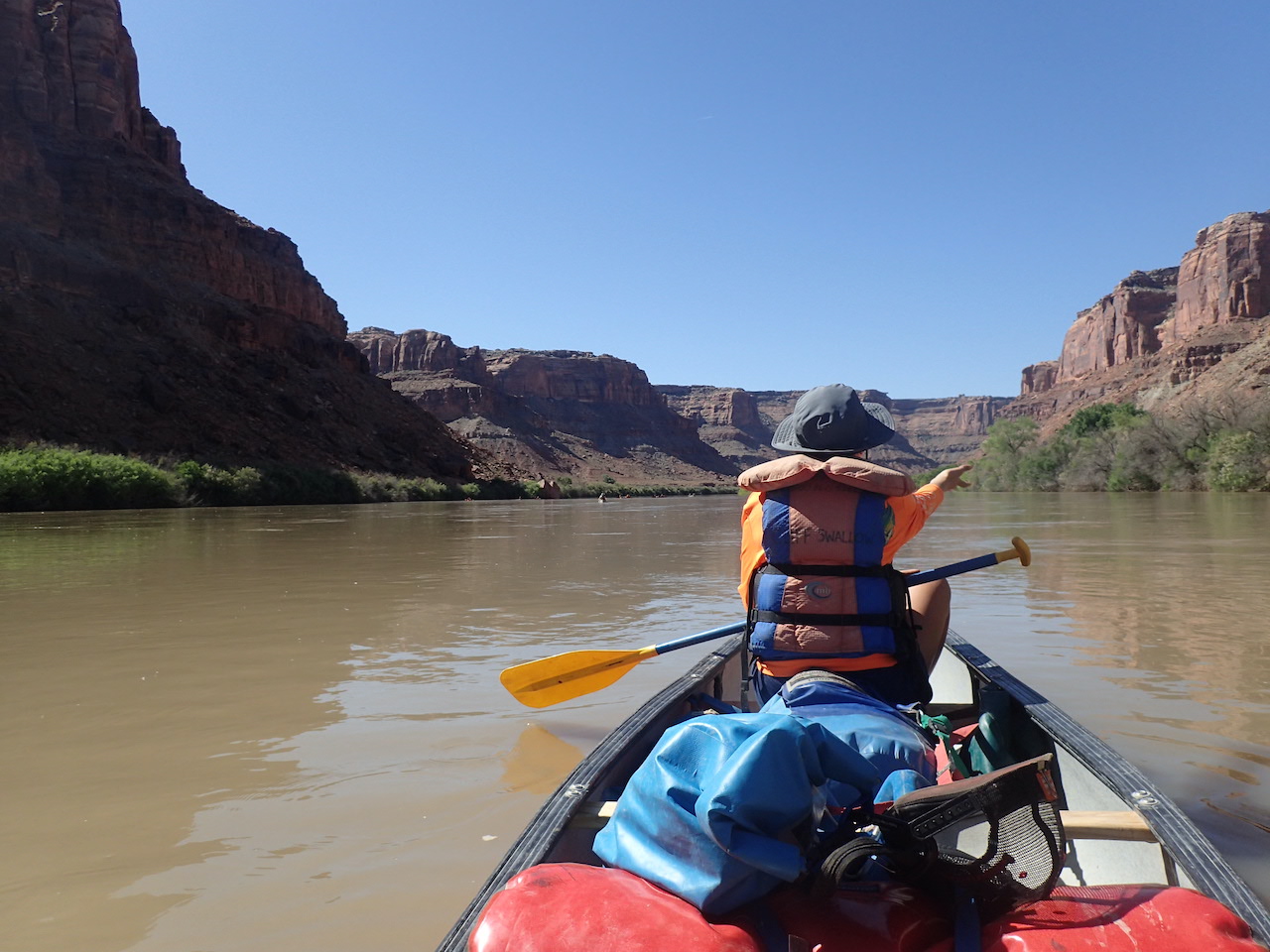
Over their years at Aspen Country Day School, children spend a cumulative 56 days and nights on outdoor education expeditions, and the capstone of them all is the Eighth Grade river trip. A week on a classic Western river with teachers and friends right before graduation gives students an unforgettable bonding experience. It’s also time to reflect on all they have learned on their journey.
Physical Education
Eighth Graders solidfy their skills in traditional team sports: volleyball, basketball, soccer, flag football, badminton, and hockey, with a focus on development of strategy and fair play. They are also introduced to Ultimate Frisbee and other non-traditional sports and games. In Middle School, students ski in multi-grade groups with teachers as chaperones.
Outdoor Education
Sixth, Seventh, and Eighth Grade students participate in the fall backpacking trips in small groups that venture out into the backcountry for peak climbs or point-to-point expeditions. These multi-grade groups develop bonds among grade levels and build community in the Middle School. Eighth Graders play a special role as leaders of their teams. The fall trips give students essential lifetime skills in backpacking, the most accessible of mountain sports.
The final trip for soon-to-be graduates is an extended a river trip in May. Time away from distractions, electronic and otherwise, provides students the space necessary to reflect on their journey through the grades at ACDS. On this river expedition, the students draft their graduation speeches, experience the magical atmosphere of a great Western river, and thrive in the camaraderie of their classmates.
SIgnature Programs
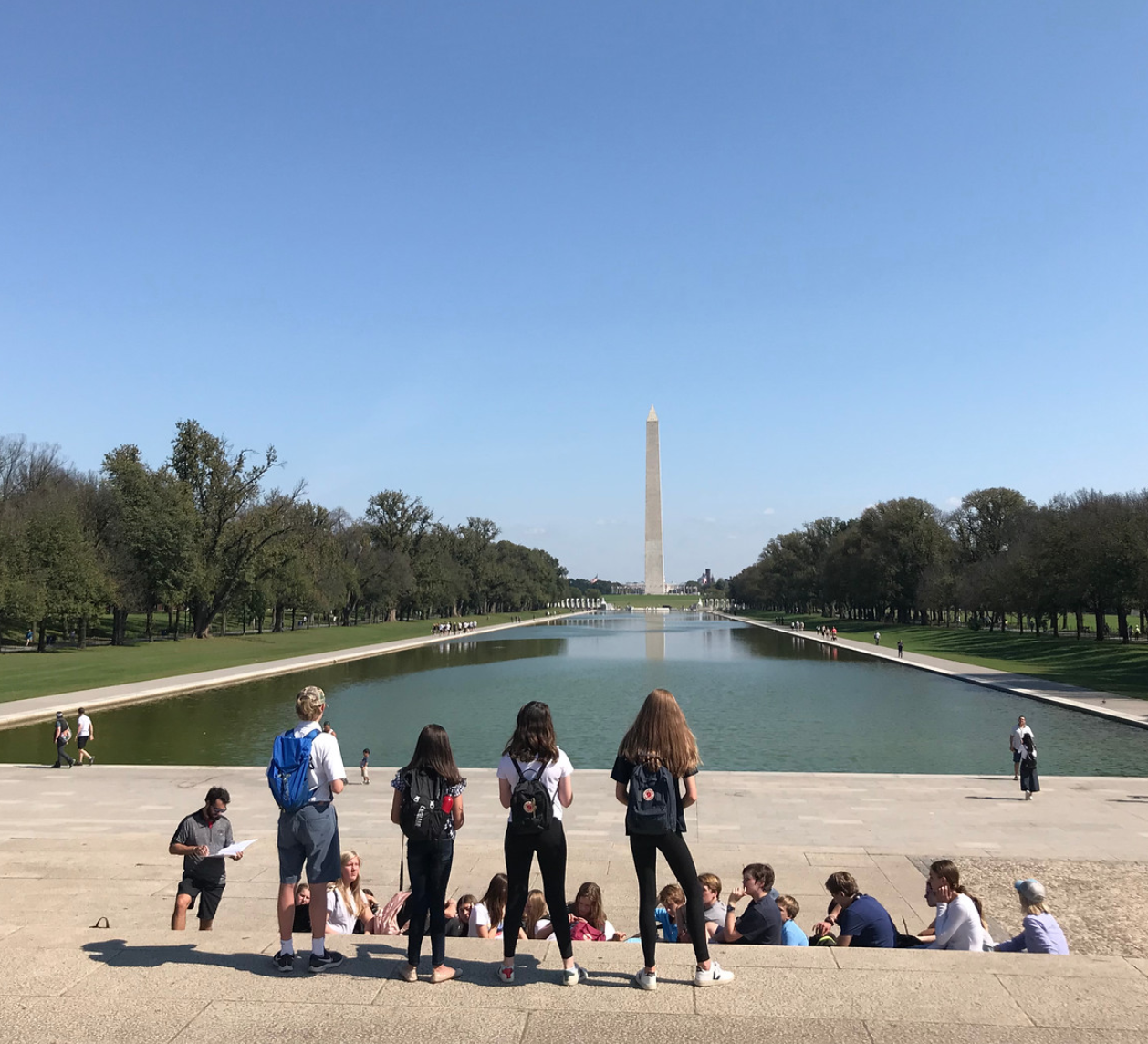
One of the highlights of the Eighth Grade year is a class trip to Washington, DC. Even though it was not possible during the pandemic, we are hopeful to revive this tradition for future classes. The DC trip is an immersive experience and an inside look at democratic institutions. Students often come away with a new appreciation not only for our national history and a better understanding of urban life.
Advisory
The Aspen Country Day School Middle School Advisory Program matches each student with an advisor who serves as a mentor and advocate. This faculty member acts as the facilitator of communication between home and school for any issues related to a student’s Middle School experience. In addition to daily meetings, advisories meet throughout the week for academic coaching and relationship and community building.
Working with a small group of approximately ten advisees throughout the year, advisors help students incorporate each of the Aspen Country Day School graduate outcomes into their daily lives. The advisory program promotes healthy relationships, academic progress, and solid communication between home and school. Overall student wellness is a team effort, and the intention at Aspen Country Day School is for all students to experience a supportive community where they are known and loved. With this foundation, they become prepared to foster and contribute to the common good.
High school placement
Secondary school placement counseling is a service that Aspen Country Day School offers to all families – part of our goal of preparing ACDS graduates not just for high school, but for lives of meaning and purpose. A dedicated team helps students consider options, prepare applications, and choose the best next step for high school.
Country Day has a strong, multi-generational track record in this area. Every year ACDS Eighth Graders venture forth to our local public high schools, Colorado Rocky Mountain School in Carbondale, other boarding schools, and independent day schools farther afield. Over the years, we have built strong relationships with the representatives of boarding and day schools nationwide, all for the benefit of ACDS graduates.
Tech with intention
Middle Schoolers are issued a Chromebook, which serves as an academic tool throughout Middle School. Students access online text books, teacher blogs, videos, TED talks, primary sources, and other resources to curate the information necessary to participate in the curriculum in each class. They also use technology to create presentations which may include Lucidchart, films, blogs, podcasts, or original TED Talks. As part of our intentional approach to technology, approach. Chromebooks are stored in laptop carts in the hallways and used only when needed for specific assignments or in-class activities.
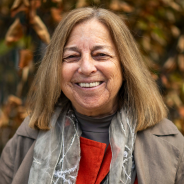
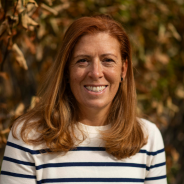
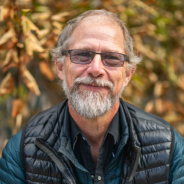
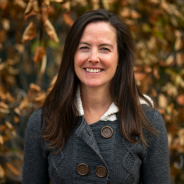
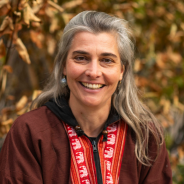
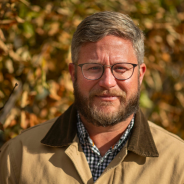
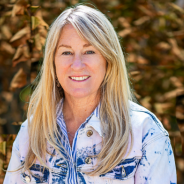
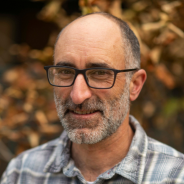
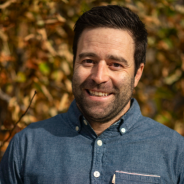
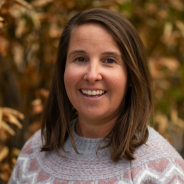
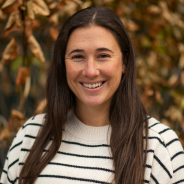
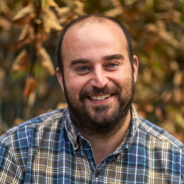
Meet the team