

Stories
Designing the School Day Around How Adolescents Learn
October 12, 2026
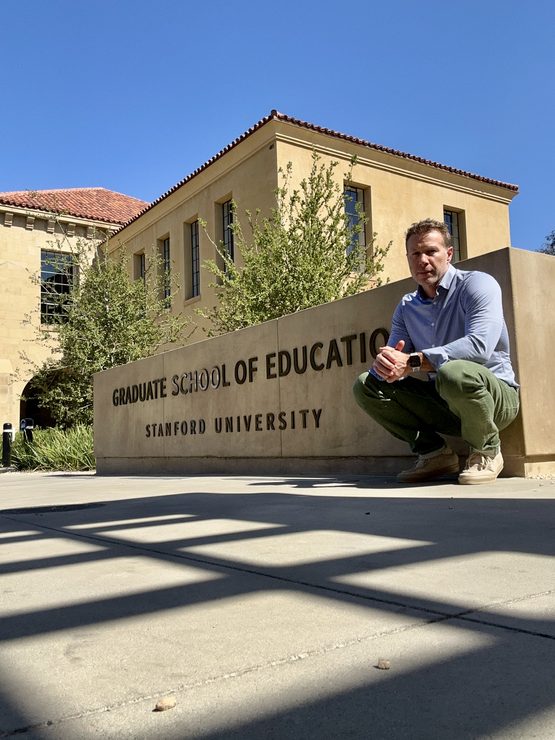
Middle School Head Mark Bosick shares Aspen Country Day’s approach to scheduling at the Challenge Success Annual Conference at Stanford University
What does a school schedule say about what a school values?
That question was at the center of Middle School Head Mark Bosick’s presentation, Time Well Designed: Creating Brain-Aligned Adolescent School Schedules, at the 2026 Challenge Success Annual Conference at Stanford University in September.
Using Aspen Country Day’s Middle School schedule as a case study, Mark shared how the structure of the school day can support the way adolescents learn and develop. His premise was straightforward: a schedule isn’t simply a way to fit classes into a day. It shapes how students experience school.
“The schedule is not an administrative document,” Mark told participants. “It is the first act of educational philosophy.”
At ACDS, that philosophy shows up in some very practical ways. The Middle School schedule is built around four principles: establishing flow, using transitions well, building community, and making academic support accessible to every student.
The ACDS Middle School day generally follows a 2×2 flow: two academic periods followed by a break. Classes are 50 minutes long, giving students time to dig into their work without stacking too many academic periods together. Morning break, lunch, and passing periods give students time to move, talk with friends, connect with teachers, and reset before the next class.
“Every schedule is a choice about what matters most.” – Mark Bosick
The pattern creates a rhythm to the day: focus, break, focus again.
After lunch comes The Bridge, a 20-minute period before afternoon classes.
Students may read, check in with an advisor, organize their work, or take a few minutes to refocus. Rather than expecting students to go directly from the energy of lunch and recess back into class, The Bridge gives them a chance to make that shift.

It also gives students practice with something adults do all the time: moving from one kind of work or energy to another and figuring out what they need to be ready for what comes next.
The Middle School schedule also protects time for students and teachers to know one another outside the regular classroom routine.
Two Community Periods each week give students time to gather, build connections across grades, meet with teachers, and spend time with advisors. Breaks, lunch, and passing periods offer more informal opportunities to be with friends and teachers.
For Mark, the point is simple: if relationships and belonging are important to a school, there has to be time for them in the day.
The schedule also creates regular opportunities for students to get academic help.
Office Hours and Community Periods give students access to teachers during the school day. On Mondays and Thursdays, Academic Afternoons extend that access from 3:15 to 4:15 pm, with teachers available to work directly with students.
Building that time into the schedule makes support available without requiring families to arrange outside tutoring or additional transportation. Just as important, it gives Middle School students practice recognizing when they need help and learning how to ask for it.
Mark’s presentation connected the ACDS schedule to the Challenge Success SPACE framework, which looks at supportive schedules, engaging pedagogy, authentic assessment, a climate of care, and education for everyone.
But much of his presentation came back to a broader question: do the choices a school makes about time match what it says it believes about students?
At ACDS, the answer can be seen throughout the Middle School day, where there’s time to concentrate and reset, be with friends and teachers, and time to ask for help. And enough consistency exists from one day to the next for students to know what to expect.
As Mark told the educators gathered at Stanford, “Every schedule is a choice about what matters most.”
At Aspen Country Day, those choices are part of the education.